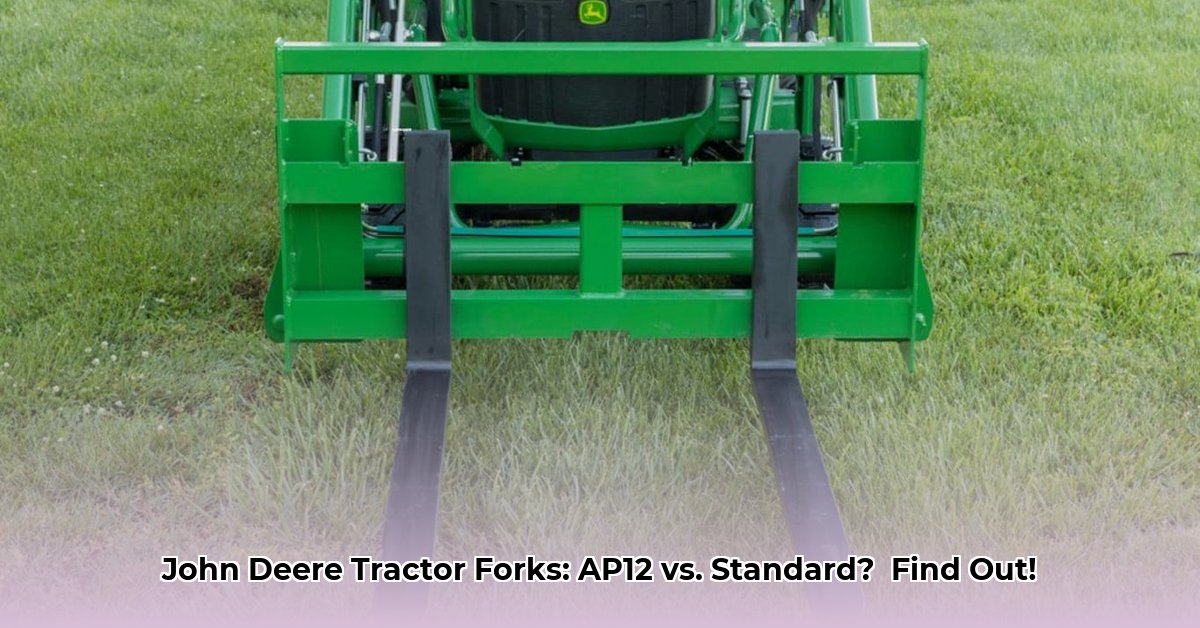
Choosing the right pallet forks for your John Deere tractor is a critical decision impacting efficiency and profitability. This comparative review analyzes two popular options: John Deere's AP12 series and the Standard Series, highlighting key differences to aid your purchasing decision. We'll examine lifting capacity, tine design, compatibility, durability, pricing, and overall versatility to help you select the best forks for your farm's needs. For more options, check out this helpful resource on tractor forks.
Lifting Capacity: How Much Weight Can Each Handle?
The AP12 series offers a significant advantage in lifting capacity, boasting a range from 3750 to 10,000 pounds. This versatility caters to both small and large-scale operations. The Standard Series, however, is generally limited to a 4000-pound capacity, according to available information. This significant difference in maximum weight capacity is a crucial factor to consider. Do you regularly handle loads exceeding 4000 pounds? If so, the AP12 series' higher capacity range becomes essential.
Tine Design: Fixed vs. Floating – A Critical Distinction
The AP12 series offers a choice between fixed and floating tines. Fixed tines provide precision for level surfaces, ideal for precise pallet handling. Floating tines, on the other hand, adapt to uneven terrain, making them suitable for rougher fields. The Standard Series typically utilizes Class II pallet fork blades (sold separately), lacking the inherent flexibility of floating tines. The choice depends on your typical working environment. Are your operations predominantly on level ground or uneven terrain? This will heavily influence your tine selection.
Compatibility: Ensuring a Seamless Fit with Your Tractor
Compatibility is paramount. The Standard Series clearly specifies compatibility with John Deere 200, 300, 400, and 500 series loaders. The AP12 series compatibility, however, requires more investigation. While John Deere suggests broader compatibility, obtaining precise details necessitates further research to ensure a perfect fit for your specific tractor model. This lack of readily available information for the AP12 series represents a significant drawback.
Durability and Construction: Material and Longevity
John Deere promotes the AP12 series as constructed from high-tensile, heavy-gauge steel, promising robustness and longevity. However, detailed material specifications for the Standard Series are lacking. This absence of information makes a direct durability comparison challenging. Furthermore, neither series readily provides information regarding corrosion resistance, a key factor in areas with harsh weather conditions. Considering the long-term investment, a thorough understanding of material composition and corrosion resistance is crucial.
Pricing and Acquisition Costs: A Transparency Gap
Unfortunately, precise pricing information for both the AP12 and Standard Series is unavailable, hindering a direct cost comparison. This lack of transparency complicates the decision-making process. Remember to factor in potential additional costs for accessories like blades, which are sold separately for the Standard Series.
Versatility vs. Specialization: Tailoring Your Choice
The Standard Series presents itself as a versatile option for various tasks—pallets, hay bales, even towing. The AP12 series, however, showcases itself as a specialized solution, prioritizing strength and accuracy in pallet handling. Your choice hinges on your operational needs. Do you require a tool for varied applications or a highly specialized solution for pallet handling?
Making the Right Choice: A Summary Table
| Feature | John Deere AP12 Series | Standard Series Pallet Fork |
|---|---|---|
| Load Capacity | 3750 lbs - 10,000 lbs | 4000 lbs |
| Tine Type | Fixed & Floating | Class II (purchased separately) |
| Compatibility | Requires further investigation | Clearly defined for specific John Deere loaders |
| Material | High-tensile, heavy-gauge steel | Information not readily available |
| Pricing | Unavailable | Unavailable |
| Versatility | More specialized pallet handling | Multipurpose use |
This table summarizes the key differences. Remember to consider the longevity of the investment, maintenance costs, and the specific demands of your farm operations.
A Step-by-Step Guide to Choosing the Right Pallet Forks
- Define Your Needs: What are your primary applications? What weight loads are common? What's your budget?
- Research Specifications: Compare lift capacities, dimensions, and weights.
- Verify Compatibility: Ensure compatibility with your John Deere tractor model.
- Read Reviews: Seek independent user reviews for insight into real-world performance.
- Obtain Quotes: Get quotes from various dealers to compare prices.
- Make Informed Decision: Synthesize all the information to make the most suitable choice for your operation.
Choosing the right pallet forks isn't just about initial cost; it's a long-term investment that significantly affects your farm's efficiency and profitability. This comparison provides a strong foundation for making an informed decision. Remember to prioritize thorough research to align your choice with your specific needs and budget.